The Art of the 'Delay Dunk': How NBA Bigs Are Evolving
2026-03-19
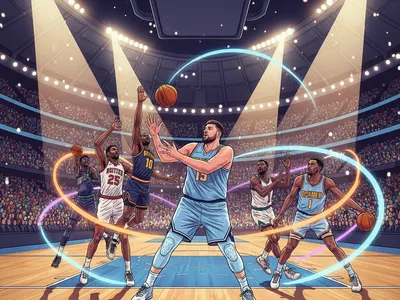
Forget the simple power slam or the acrobatic alley-oop. A subtle, yet increasingly effective, evolution is taking place in the NBA’s paint: the ‘delay dunk.’ This isn't about raw athleticism; it's about deception, footwork, and a sophisticated understanding of defensive timing. Traditionally, big men would either catch and immediately go up strong, or make a decisive post move. Today, a new breed of centers is adding a crucial pause, a micro-hesitation, that throws defenders off-balance just enough to create an uncontested path to the rim.
Nikola Jokic: The Master of the Misdirection
No one exemplifies the delay dunk better than Nikola Jokic. Last night against the Wizards, we saw a prime example. Catching the ball on the short roll, with Daniel Gafford recovering, Jokic took a deliberate dribble, pivoted slightly as if to initiate a post-up, then, instead of committing, he held the ball for a split second, eyes up as if looking for a pass. Gafford, anticipating either a shot or a pass out, momentarily relaxed his defensive stance. That fractional delay was all Jokic needed. He then exploded to the rim with a two-hand flush, leaving Gafford a step behind. It wasn't a highlight-reel poster, but an incredibly efficient, high-percentage score, emblematic of Jokic's cerebral approach to the game. His ability to manipulate defensive reads with subtle body language and ball fakes before committing to the dunk is unparalleled.
Domantas Sabonis: Power with Precision
Domantas Sabonis, while possessing more traditional power, is also a practitioner of the delay dunk. In the Kings' recent game against the Bucks, Sabonis received the ball at the free-throw line extended. Brook Lopez, a disciplined rim protector, was positioned perfectly. Instead of driving immediately, Sabonis took one hard dribble towards the basket, then momentarily lifted the ball as if to shoot a floater. Lopez, conditioned to contest the shot, began to elevate. In that precise instant, Sabonis dropped his shoulder and drove past Lopez for a powerful one-handed dunk. The delay, in this case, was a feigned shot, creating just enough verticality from the defender to open a driving lane. Sabonis finished with 23 points and 14 rebounds, with several of his interior scores coming from these deceptive moves.
The Tactical Advantage of the Pause
The beauty of the delay dunk lies in its tactical simplicity and effectiveness. Defenders are trained to react to immediate threats – a direct drive, a quick shot, or a pass. By introducing a deliberate pause, centers exploit these defensive instincts. They force the defender to commit to an action that isn't actually happening, leaving them vulnerable to the actual move. This isn't about explosive athleticism; it's about timing, spatial awareness, and exploiting defensive anticipation. As the league continues to emphasize spacing and efficient offense, expect to see more big men, even those not known for their vertical leap, incorporating this detailed, intelligent scoring technique into their arsenal.
The delay dunk is a proof of the evolving intelligence of NBA bigs. It's a subtle art form, often overlooked in the highlight reels, but it's a critical component of high-efficiency scoring for the league's most cerebral centers. It’s not just about getting to the rim; it’s about making the defender think they know what’s coming, and then proving them wrong.